







Exploring Wooden Teething Toys: Natural Relief for Babies
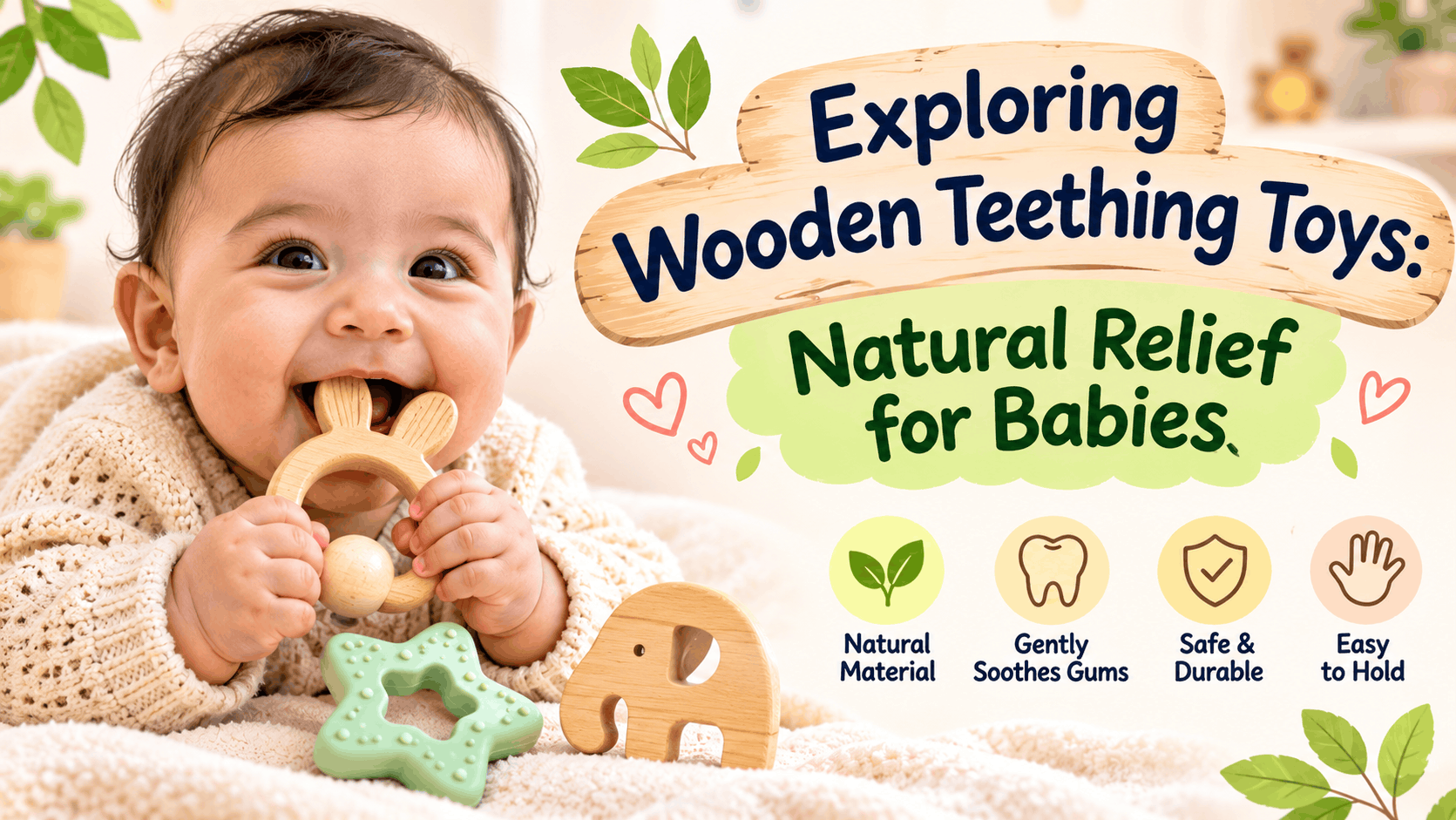
Wooden vs Silicone Teethers in India: How to Choose a Safe Baby Teether
Teething can bring extra drooling, gum discomfort and a strong urge to chew. A suitable teether gives your baby an age-appropriate object to explore and may help soothe the gums. Wooden and silicone teethers are both available in India, but neither material is automatically safer. Choose a well-made, age-appropriate product that is easy to clean, inspect and use under adult supervision.
What Is a Baby Teether?

A baby teether is an object designed for babies to bite or chew during the teething stage. Teethers are available in different shapes, sizes and materials, including food-grade silicone and finished wood. Some have simple textures that babies can explore with their mouths and hands.
Teething experiences vary from baby to baby. A teether may provide comfort and a safe object to chew, but it does not treat an underlying medical problem or guarantee relief from teething pain.
Wooden vs Silicone Teethers: What Is the Difference?
| Feature | Wooden Teether | Silicone Teether |
|---|---|---|
| Material | Made from finished wood intended for baby use | Made from silicone; check the manufacturer's material and safety information |
| Texture | Usually firm and smooth, depending on its design | Can have soft, flexible or textured surfaces |
| Cleaning | Follow the maker's cleaning instructions; avoid soaking unless permitted | Follow the manufacturer's washing and sterilising instructions |
| Inspection | Check for splinters, cracks, rough edges and finish damage | Check for tears, cracks, loose parts and material deterioration |
| Best considered for | Families who prefer a firm, simple wooden design | Families who prefer a flexible, easy-to-grip design |
The best choice depends on the individual product, its construction, age suitability and care instructions. Do not assume that a natural or flexible material is automatically safe for a baby to chew.
How to Choose a Teether: Best For, Age and Price
| Teether type | Best for | Age guidance | Indicative price in ₹ |
|---|---|---|---|
| Simple silicone teether | Babies who prefer a flexible surface | Follow the product's stated age range | ₹150–₹500 |
| Textured silicone teether | Babies who enjoy different surface textures | Follow the product's stated age range | ₹200–₹700 |
| One-piece wooden teether | Families looking for a firm wooden design | Only if specifically designed and labelled for the baby's age | ₹250–₹800 |
| Wood and silicone combination teether | Families considering a combination of materials | Check age guidance and the security of every component | ₹300–₹900 |
Price note: These are broad illustrative market estimates, not live product prices or a Lil Amigos Nest price list. Actual prices vary by brand, construction, materials and seller. Confirm current product prices and availability before publishing.
What Is the Best Teether for a 4-Month-Old Baby?
For a 4-month-old, look for a lightweight teether specifically labelled as suitable from that age. It should be easy for the baby to hold, free from detachable small parts and made from materials intended for baby products. Always follow the product's age label and supervise use.
Do not select a teether only because it is marketed as natural, handmade or non-toxic. Check the manufacturer's safety information, construction, cleaning instructions and applicable certification.
Safety Checklist Before Buying a Baby Teether
- Check the age label: Buy only products clearly intended for your baby's age group.
- Look for secure construction: Avoid loose beads, detachable decorations, sharp edges and small components that could become choking hazards.
- Inspect wooden teethers: Check for splinters, cracks, rough surfaces, peeling coatings and signs of damage.
- Inspect silicone teethers: Do not use products with tears, cracks, sticky surfaces or damaged sections.
- Check product information: Look for manufacturer details, material information, care instructions and applicable safety certification.
- Supervise every use: Do not leave a baby alone with a teether or allow them to sleep with one.
- Avoid teething necklaces: Do not put amber or other teething necklaces around a baby's neck, wrist or ankle. They can create choking or strangulation hazards.
Understanding BIS Standards for Teething Toys in India
In India, toys covered by the Toys (Quality Control) Order are subject to applicable BIS requirements. Non-electric toys are generally assessed under the applicable IS 9873 requirements, including relevant requirements for mechanical and physical properties and other safety aspects.
BIS has published age-category information that includes teethers and teething rings from 4 months. This is a useful reference, but it does not mean every teether is suitable from 4 months. Follow the specific product's age marking and verify its applicable certification and compliance information.
Parents should look for the applicable BIS Standard Mark and verify product details rather than relying only on marketing claims such as natural, wooden, handmade or baby-safe. Standards and amendments can change, so manufacturers and sellers should check the latest applicable requirements.
How to Clean and Care for Teethers
- Clean the teether before its first use according to the manufacturer's instructions.
- Wash silicone teethers using the recommended method and allow them to dry properly.
- Clean wooden teethers only as directed by the manufacturer. Avoid prolonged soaking or harsh cleaning chemicals unless the product instructions specifically permit them.
- Inspect the product before each use and stop using it if it becomes damaged.
- Do not freeze a teething ring unless its manufacturer specifically says it is designed for that use. Never give a frozen-hard teether to a baby.
- Keep teethers clean and store them in a clean, dry place.
Natural Ways to Comfort a Teething Baby
Along with an appropriate teether, parents can try gently rubbing the baby's gums with a clean finger. A cool, damp washcloth may also provide comfort when used with close supervision. If your baby has a fever, persistent diarrhoea, feeding difficulties or seems unusually unwell, do not assume teething is the cause. Contact your paediatrician for advice.
Best Teething Toys for Babies India – Safe, Non-Toxic OptionsFrequently Asked Questions About Baby Teethers
1. Which teether is best for a 1-year-old baby?
Choose a teether designed for the child's age, with secure construction, no detachable small parts and clear cleaning instructions. A suitable silicone or wooden teether may be considered, depending on the product's safety information and your child's ability to use it safely.
2. Which is better: wooden or silicone teethers?
Neither material is automatically better. Wooden teethers are generally firm, while silicone teethers can be flexible. Compare the product's age suitability, construction, material information, cleaning requirements and applicable safety certification before buying.
3. Can a 4-month-old baby use a teether?
Some teethers are designed for babies from 4 months, but parents should check the specific product's age label and safety information. Choose a lightweight, appropriately sized product without detachable parts and supervise the baby during use.
4. Are wooden teethers safe for babies?
A wooden teether should be specifically designed for baby use, smoothly finished and free from splinters, cracks, loose parts and unsuitable coatings. Check the manufacturer's safety and cleaning information and applicable BIS requirements. Never assume that all wooden teethers are safe simply because they are made from wood.
5. How should I clean a wooden baby teether?
Follow the manufacturer's cleaning instructions. Many wooden products should be wiped or cleaned with a suitable damp cloth rather than soaked. Allow the product to dry fully and stop using it if the surface cracks, splinters or deteriorates.
6. Do teethers actually relieve teething pain?
A suitable teether may help soothe discomfort by giving a baby something safe to chew. It does not treat every cause of crying or illness. If symptoms are persistent, severe or accompanied by other signs of illness, consult your paediatrician.


-
The Joy and Benefits of Games and Puzzles for Kids
 November 14, 2026
-
Wonderful World of Wooden Toys: A Comprehensive Guide for Parents
 November 14, 2026
-
Exploring Wooden Teething Toys: Natural Relief for Babies
November 14, 2026
-
Christmas Activities for Kids: Fun Ideas That Make December Magical
 November 13, 2026
-
Christmas Holiday Recipes for Kids: Easy and Yummy
 November 12, 2026
Please complete your information below to login.
Sign In
Create New Account