
Sore gums can turn a happy baby into a very cranky one overnight. The simplest fix is a good set of baby teethers that your little one can bite, chew and hold. The right teether gives gentle pressure on the gums, keeps tiny hands busy and helps your baby feel calm again.
Most parents end up choosing between wooden baby teethers and silicone baby teethers, and both can work beautifully. What matters most is that you pick safe baby teethers made from food-grade materials with no sharp edges or loose parts. If you like natural care, an antibacterial teether made of neem or beechwood is a smart option. In this guide, you will learn how to choose, how to clean, and which teethers give you the best value.
Why Every Baby Needs a Teether
Babies usually begin teething around four to seven months, though every child is different. New teeth push through the gums, and that causes itching, swelling and fussiness. Chewing on something firm and smooth helps ease that feeling.
A teether also gives your baby a safe thing to put in the mouth. Babies explore the world by mouthing objects, so a clean teether is far better than a household item. Different shapes and textures also support touch, hand grip and early mouth muscle skills.
Wooden vs Silicone: Which One Should You Pick?
Here is the honest answer. Both are good, and many families use both. The difference lies in how they feel and how you care for them.
Wooden baby teethers
Wood is firm, natural and plastic-free. It is great for babies who like strong pressure on their gums. Neem and beechwood are popular because they are known for their natural antibacterial qualities. Wood should be smooth and splinter-free, and it needs gentle hand washing. Never soak it in water for long.
Silicone baby teethers
Silicone is soft, flexible and easy to clean. Medical or food-grade silicone is a favourite for younger babies because it is gentle on tender gums. Many silicone teethers can be washed with warm soapy water, and some can be sterilised, so always check the product details first.
The simple rule
Choose silicone for early teething and busy travel days. Choose wood for firm chewing and a natural feel. If you want the best of both, pick a teether that combines the two materials.
How to Choose Safe Baby Teethers
Safety comes first, always. Use this quick checklist before you buy.
- Material: Look for non-toxic, food-grade silicone, natural rubber or smooth solid wood.
- Size and shape: It should be easy for small hands to hold and too large to fit fully in the mouth.
- No small parts: Avoid anything with pieces that can come off.
- Texture: Gentle ridges and bumps help soothe different parts of the gums.
- Easy cleaning: A teether you can clean quickly will get used more often.
- Clear product details: Trusted sellers share materials and care steps openly.
Teethers vs Pacifiers for Babies
Many parents ask if pacifiers for babies can replace a teether. They do different jobs. A pacifier is made for sucking and comfort, while a teether is made for biting and chewing on sore gums. A pacifier is not built to handle the firm chewing that comes with new teeth.
If your baby uses a pacifier for sleep, keep it for that. Keep a teether ready for the daytime when gums feel itchy. Together they cover both needs.
Our Top Teether Picks at Best Prices
Here are five teethers that cover every style and budget. All prices are from the Lil Amigos Nest product pages.
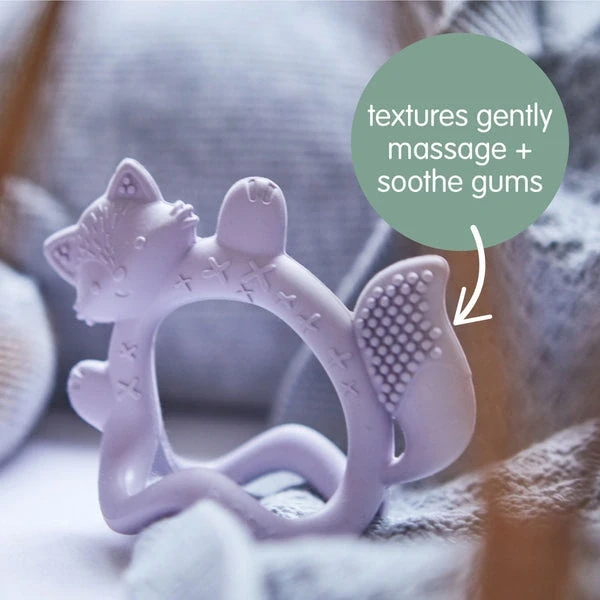
b.box Trio Teether – Peony Purple
₹1,399
Three textured teethers on one ring, made of silicone and antibacterial beechwood. Suitable from 3 months.
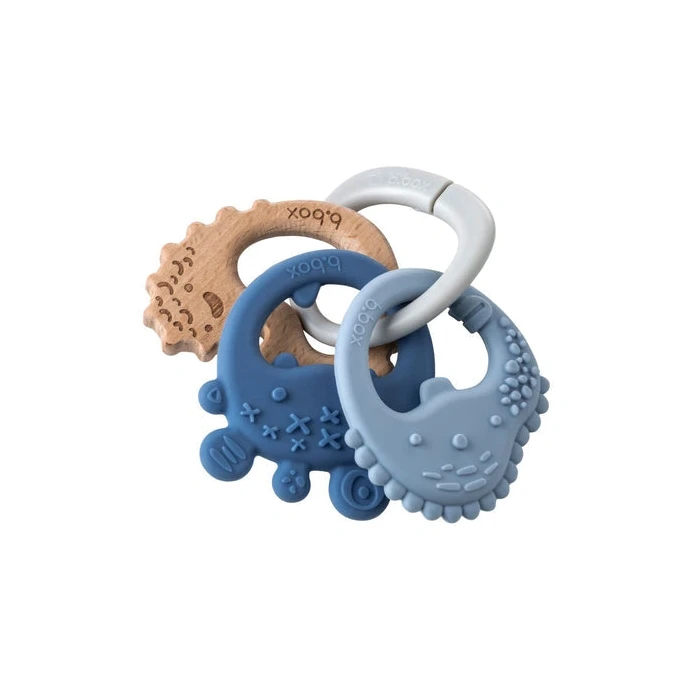
b.box Trio Teether – Lullaby Blue
₹1,399
The same three-stage design in a soft blue shade. Relief for front, middle and back gums.
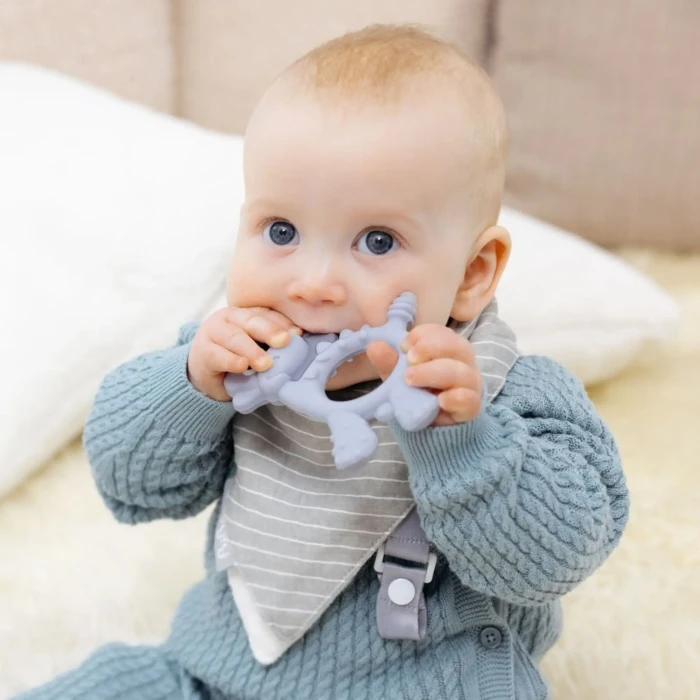
Dotty the Dinosaur Silicone Teether
From ₹999
A cute medical-grade silicone teether by BiBaDo that helps build mouth muscles for biting and chewing.

₹200
A hand-finished, BIS-certified teether in solid neem wood. Plastic-free and our best budget buy.
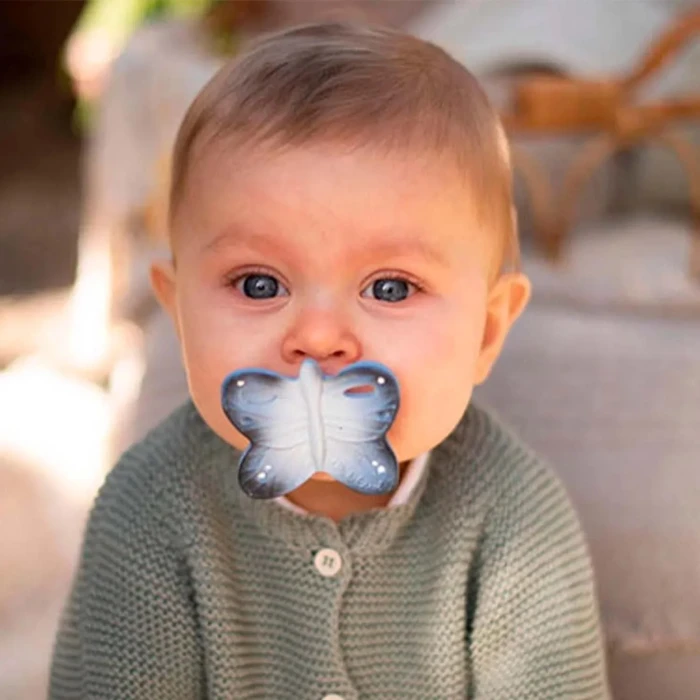
Blues the Butterfly Chewy Teether
₹1,199
Handmade from 100% natural rubber and painted with plant pigments. Easy to clip on a strap for travel.
Which one is right for you?
If you want strong value, the neem wood hippo at ₹200 is hard to beat. If you want a teether that grows with your baby, the b.box trio gives you three stages on one ring. For a soft and playful option, Dotty and Blues are both lovely choices.
How to Clean and Care for Your Teether
Clean teethers keep your baby healthy. Good habits take only a minute each day.
- Silicone: Wash with warm water and mild soap. Some pieces are steriliser safe, so check the care notes.
- Wood: Wipe or hand wash quickly and dry fully. Do not soak it or put it in a dishwasher.
- Natural rubber: Wipe gently with a damp cloth and keep it away from direct heat.
- Check often: Throw away any teether that cracks, peels or looks worn.
- Store clean: Keep teethers in a clean pouch or box, not loose in a bag.
Tips to Soothe Your Teething Baby
A teether works best when you use it the right way. Offer it when your baby is calm and alert, not just when they cry. Always watch your baby while they chew. Keep two or three teethers on hand so you can swap one while the other is being washed. If your baby seems very unwell, has a high fever or refuses to feed, speak to your paediatrician.
Frequently Asked Questions About Baby Teethers
Are wooden baby teethers safe?
Yes, when they are made of smooth, solid wood with a splinter-free finish. Pick teethers from trusted sellers and check them often for cracks.
Are silicone baby teethers better than wooden ones?
Neither is better for every baby. Silicone is softer and easier to clean, while wood is firmer and natural. Many parents keep one of each.
What is an antibacterial teether?
It is a teether made from a material known for natural antibacterial qualities, such as neem wood or beechwood. It still needs regular cleaning.
At what age can a baby start using a teether?
Many teethers suit babies from around three months. Always follow the age guidance on the product page.
Can a pacifier replace a teether?
No. A pacifier is for sucking and comfort, while a teether is made for chewing on sore gums.
Teething is a short phase, but the right teether makes it far easier for you and your baby, and the five options above give you safe, well-priced choices in wood, silicone and natural rubber. Pick the one that fits your baby's mood and your budget, keep it clean, and enjoy the calmer days ahead.
The information below is required for social login
Sign In
Create New Account